Why Leading RIAs Are Embracing Bitcoin: A Blueprint for Growth

Glenn Cameron | Global Head, Onramp Institutional
· Updated
Registered Investment Advisors are adopting bitcoin at accelerating rates. Over 2,100 US institutional investors have disclosed bitcoin allocations in 13F filings, BlackRock's iShares Bitcoin Trust reached $10 billion AUM in 49 days (fastest ETF in history), and client demand for bitcoin exposure is becoming a competitive differentiator for advisory practices.
The Full Report
The full text of Why Leading RIAs Are Embracing Bitcoin from Onramp Research, first published January 23, 2025. This edition includes data through September 2025.
Introduction: Why RIAs Can’t Ignore Bitcoin
The Rise of Bitcoin: From Fringe Asset to Institutional Adoption
In just 16 years, Bitcoin has evolved from a niche experiment, only understood by a few visionaries into a formidable force on the global financial stage. Early adopters saw it for what it could become: a solution to the flaws and corruption of the post-1971 fiat system, which went into overdrive at the time of GFC in 2008. Yet, governments, central banks, and the financial establishment dismissed it, ridiculing or attacking the truths Bitcoin lays bare.
Despite relentless criticism and predictions of its demise, Bitcoin has proven its resilience. It has grown exponentially and secured its place as a legitimate and rapidly growing new asset class. Today, Bitcoin is poised to rival gold, bonds, and real estate as a cornerstone of the global financial system, potentially becoming a global reserve asset.

This isn’t hyperbole. Recent data underscores Bitcoin’s steady current ascent to institutional prominence. Fidelity’s Institutional Investors Digital Asset Survey (Link) reveals that 58% of institutional investors now hold digital assets. Goldman Sachs’ Family Office Investment Insights (Link) highlights a growing number of family offices allocating to Bitcoin, while the Bitwise 2025 Benchmark Survey (Overview and Full PDF) confirms rising adoption among financial advisers.
In addition, major players like BlackRock, Fidelity, Invesco and Franklin Templeton have launched Bitcoin ETFs, with dramatic results. BlackRock’s iShares Bitcoin Trust (IBIT) ETF and Fidelity’s Wise Origin Bitcoin Fund (FBTC) ETF shattered records, reaching $10B AUM in just 49 days and 77 days respectively, faster than any ETF in history.
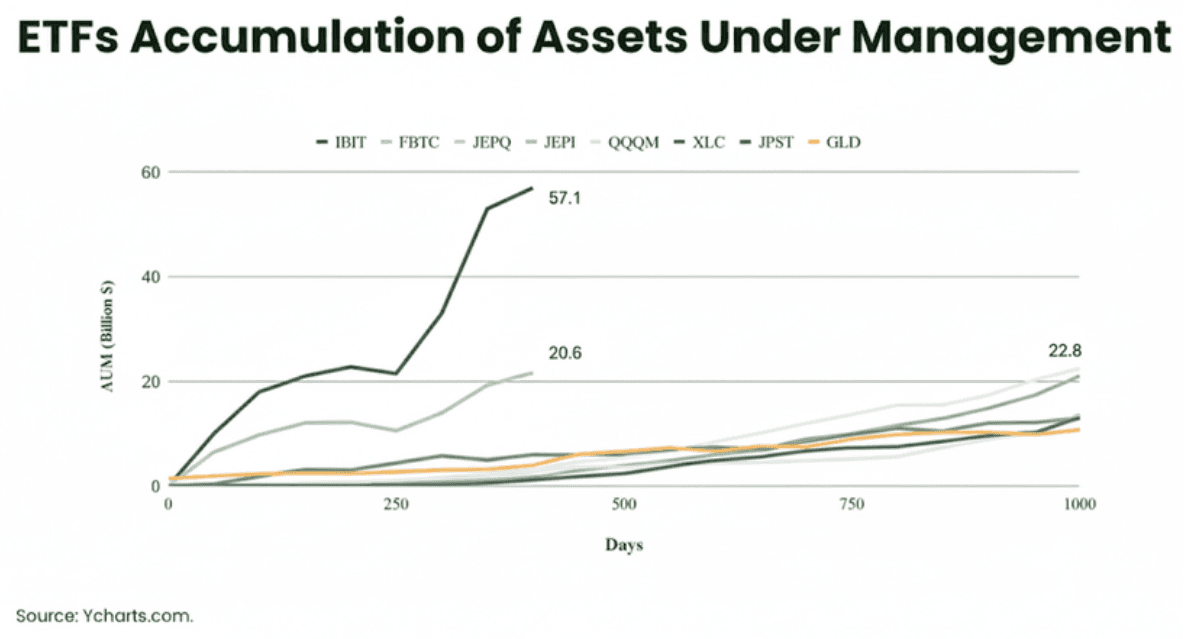
Moreover, more than 2,100 US institutional investors, as revealed in 13F filings, have now made allocations to Bitcoin within their portfolios. Meanwhile, robust market infrastructure (secure custodial services, transparent pricing platforms, and evolving regulatory clarity) have solidified Bitcoin’s status as an institutional-grade asset.
Bitcoin ETF Holders: Full List From 13F Filings
For RIAs, ignoring Bitcoin is no longer an option. Understanding and incorporating the asset class is fast becoming a strategic imperative to retain clients, attract new ones, and stay competitive.
Client Demand and Industry Trends: The Questions RIAs Must Answer
The surging demand from clients makes Bitcoin impossible for RIA’s to continue to ignore or dismiss. Whether inspired by the investment returns of friends, or the headlines of institutional adoption, clients are increasingly asking how Bitcoin fits into their long-term financial strategies. RIAs who remain uninformed risk losing relevance, and clients, to competitors willing to fill the gap.
This trend isn’t isolated. It reflects broader shifts in finance and technology: the digitalisation of money, the rise of a younger, innovation-driven investor class, and evolving expectations for advisers. RIAs who can address client enquiries with informed, tailored recommendations will not only meet the moment but also solidify their value. By embracing Bitcoin, advisers position themselves as thought leaders, demonstrating foresight and reinforcing trust in a rapidly changing landscape.
Competitive Advantage: Avoiding Obsolescence in the Digital Asset Era
Advisers who master Bitcoin gain a powerful edge. They attract forward-thinking clients, strengthen relationships, and position their firms as modern, responsive, and in tune with an evolution in money and investment markets.
Conversely, those who dismiss Bitcoin risk obsolescence. Lagging behind leaves a vacuum that competitors, established or disruptive, will gladly exploit. Proactively integrating Bitcoin into their services enables RIAs to differentiate, future-proof their businesses, and command trust in a digital-first era. This advantage extends beyond returns, enhancing brand perception, client retention, and relevance in an industry where digital fluency is no longer optional.
Bitcoin and the Business of RIAs
Boosting AUM Through Bitcoin Expertise
For RIAs, embracing Bitcoin isn’t just an addition to investment strategies: it’s a business opportunity. By showcasing Bitcoin expertise, advisers can attract new clients, including high-net-worth individuals who have built wealth through early adoption, as well as win those clients ready to make their first allocation to this emerging asset class. Positioning Bitcoin as a key part of a diversified, forward-thinking portfolio strategy reinforces an RIA’s value proposition. As the best-performing asset of the past decade, Bitcoin has captured the attention of investors seeking long-term growth and diversification. RIAs who recognise this trend establish themselves as innovative, adaptable partners, attracting new clients while retaining and strengthening existing relationships.
Building Trust and Credibility by Staying Ahead of Market Trends
In a world defined by rapid technological change, clients value advisers who stay ahead of the curve. By integrating Bitcoin into their practice, RIAs demonstrate a commitment to understanding and embracing shifts in the financial landscape, positioning themselves as proactive, informed leaders.
Clear, articulate guidance on Bitcoin’s investment rationale and its role in portfolio diversification bolsters trust and credibility. RIAs who offer thoughtful, strategic insights differentiate themselves in a crowded market, where standing still is indistinguishable from falling behind.
Tapping into Held-Away Bitcoin Assets: Converting Independent Investors
A major untapped opportunity for RIAs lies with investors who already hold Bitcoin independently, often through self-custody or exchanges. While these investors may have started independently, many now seek professional guidance to manage their holdings within a broader financial strategy.
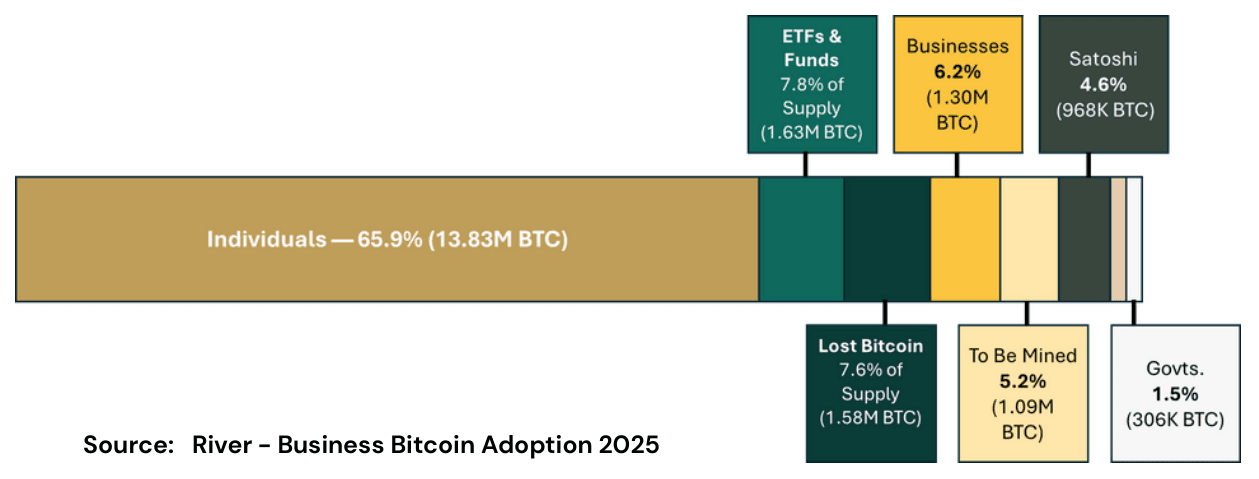
Close to 70% of Bitcoin’s supply already issued is held by individuals. With Bitcoin’s market capitalization now at c. $2.25 trillion, that’s c. $1.5 trillion, with a very large percentage of that held in self-custody.
RIAs with Bitcoin expertise (or partnered with experts) can help these clients integrate their Bitcoin into holistic, professionally managed portfolios. This not only increases assets under management but also provides clients with a unified, strategic approach to wealth management. For investors looking to align Bitcoin with retirement goals or broader financial objectives, having a trusted adviser capable of delivering clear, expert advice is invaluable.
Establishing Leadership in a Rapidly Evolving Market
In a competitive industry, early adoption of Bitcoin sets RIAs apart as pioneers. By dedicating resources to ongoing education, research, and client communication, firms can lead industry discussions, shaping best practices.
Embracing Bitcoin showcases an RIA’s commitment to innovation and positions the firm as a forward-thinking authority. Clients gravitate towards firms that demonstrate a measured, strategic approach to new opportunities. By leveraging Bitcoin expertise and collaborating with specialist partners, RIAs can solidify their reputation and ensure resilience in an evolving market.
The Strategic Case for Bitcoin in RIA Portfolios
Bitcoin’s Outperformance: The Best-Performing Asset of the Decade
Over the past decade, Bitcoin has consistently outperformed traditional asset classes, delivering returns that dwarf equities, bonds, real estate, and gold. Despite its short-term volatility, Bitcoin’s compound annual growth rate (CAGR) is unmatched, averaging 59% annually over the past five years, compared to the S&P 500’s 13%. Such performance has not only captured the attention of retail investors but also institutional players, including pension funds, family offices, endowments, and hedge funds.
| Years | Bitcoin CAGR | Gold CAGR | S&P 500 CAGR |
|---|---|---|---|
| 1 year | 87% | 39% | 15% |
| 2 year | 105% | 34% | 20% |
| 3 year | 76% | 27% | 18% |
| 4 year | 22% | 18% | 9% |
| 5 year | 59% | 12% | 13% |
| 6 year | 47% | 14% | 14% |
| 7 year | 47% | 16% | 12% |
| 8 year | 49% | 13% | 13% |
| 9 year | 78% | 11% | 13% |
| 10 year | 85% | 12% | 13% |
Source: CaseBitcoin, Bitcoin & Traditional Assets CAGR table (accessed 1 Sep 2025)
The chart above shows bitcoin's Compound Annual Growth Rate (CAGR) vs other assets over various timeframes. For example, its shows that bitcoin has returned 59% on average, every year, for the past 5 years, while the S&P 500 has returned 13% and gold 12% on average each year over the same period.
For RIAs, the fundamentals behind Bitcoin’s historical growth provide a compelling case for inclusion in client portfolios. Its uncorrelated returns and explosive long-term growth potential make it a valuable addition to a diversified investment strategy.
Portfolio Diversification: A Low-Correlation Asset in a Correlated World
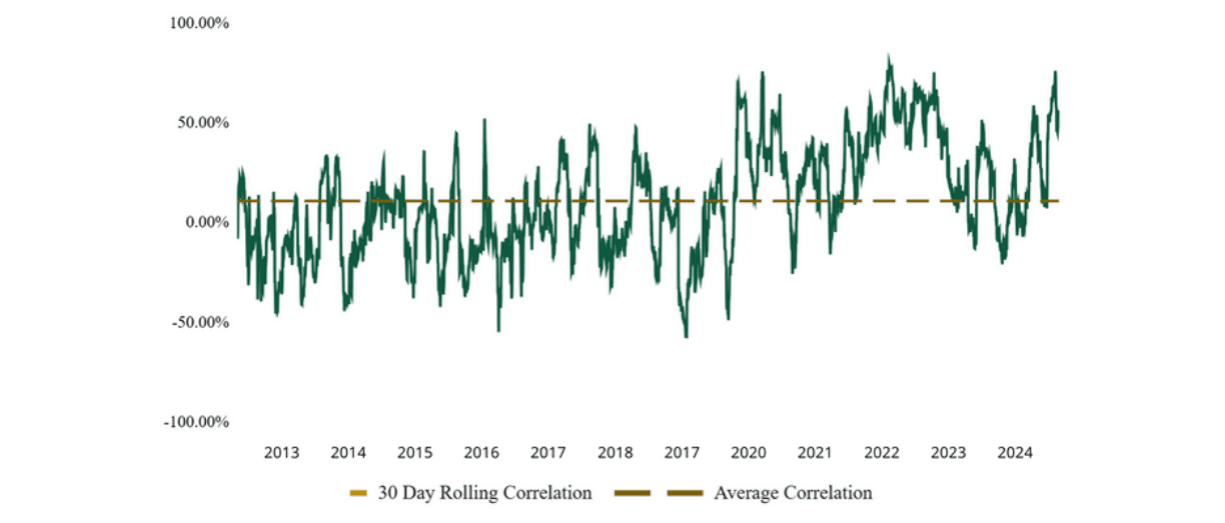
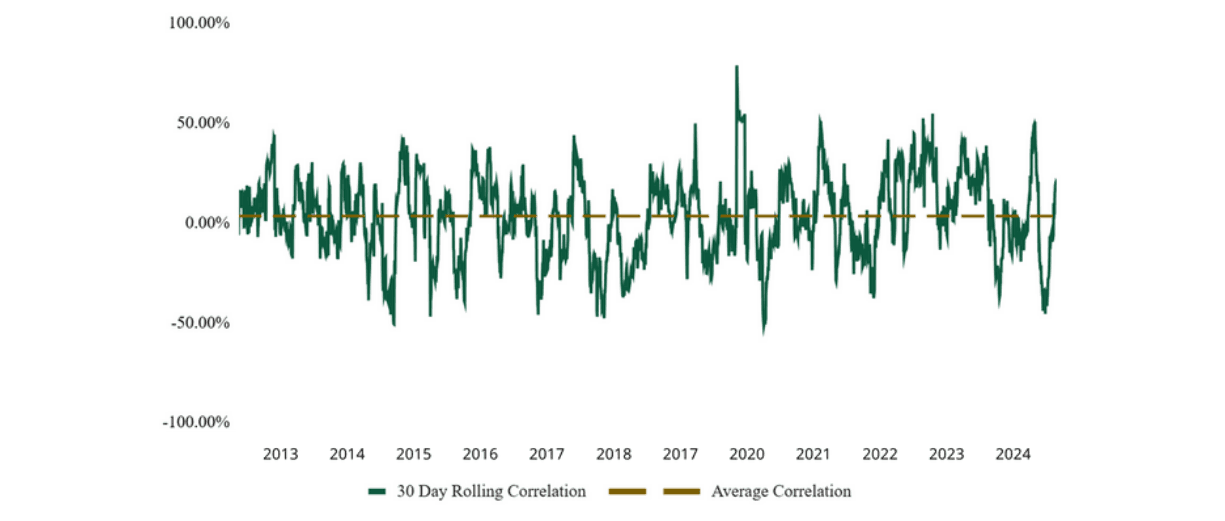
In today’s interconnected financial markets, diversification is paramount. Bitcoin’s decentralised nature, and immunity from central bank monetary policies, as well as its unique market dynamics set it apart from traditional asset classes, offering low correlation with equities and bonds over the long term.
Although Bitcoin’s standalone volatility is high, its independence from traditional economic factors means it most often performs differently during market disruptions. For example, during periods of geopolitical instability, Bitcoin has demonstrated resilience as an alternative safe haven. Adding Bitcoin to a portfolio can reduce overall risk by introducing a return driver that isn’t tied to broader market sentiment.
| Event | Date | 10D Return (SPX) | 10D Return (Gold) | 10D Return (BTC) | 60D Return (SPX) | 60D Return (Gold) | 60D Return (BTC) |
|---|---|---|---|---|---|---|---|
| US - Iran Escalation | Jan 3, 2020 | 2% | 0% | 12% | -7% | 6% | 20% |
| Covid Outbreak | Mar 11, 2020 | -20% | -9% | -25% | 2% | 3% | 21% |
| 2020 US Election Challenges | Nov 3, 2020 | 7% | -1% | 19% | 12% | -1% | 131% |
| Russian Invsaion of Ukraine | Feb 24, 2022 | 1% | 2% | -6% | 3% | 9% | 15% |
| US Regional Bnaking Crisis | Mar 9, 2023 | -2% | 10% | 25% | 4% | 11% | 32% |
Source: Blackrock, Bitcoin: A Unique Diversifier
Inflation Hedge: Protecting Wealth Amidst Currency Debasement
Bitcoin’s strongest strategic investment appeal lies in its role as a hedge against inflation and currency debasement. Unlike fiat currencies, which are subject to unlimited supply expansion, Bitcoin’s supply is fixed at 21 million. This mathematical scarcity makes it a compelling alternative to assets like gold, which, while scarce, sees its supply grow annually.
During the inflation surge of 2022–2023, Bitcoin’s price rose by over 60%, significantly outperforming gold and all other asset classes. Moreover, Bitcoin’s forward-looking correlation with inflation expectations strengthens its position as a hedge, offering protection in anticipation of rising inflation risks.
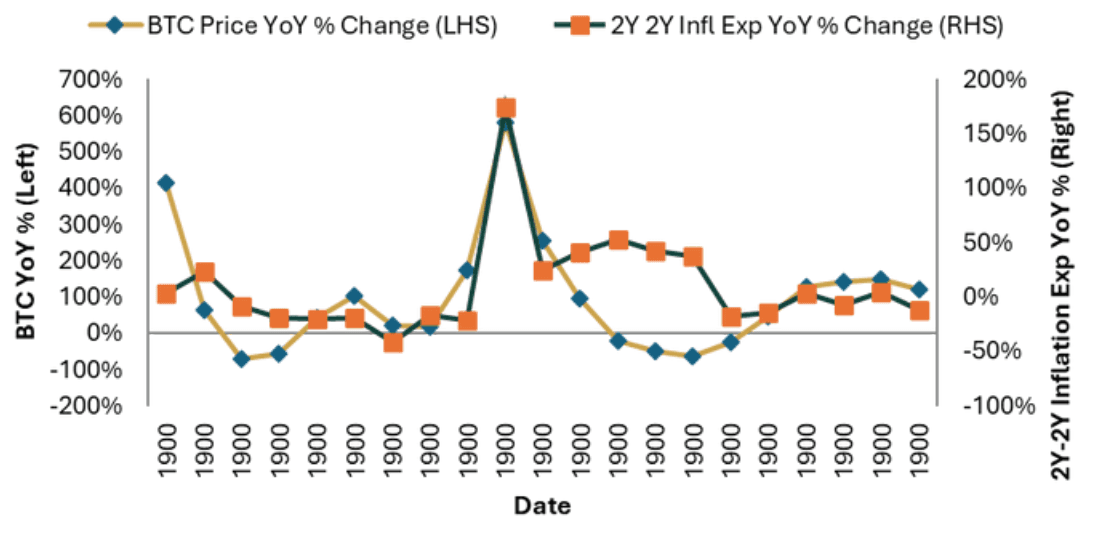
Source: Source: Onramp via Federal Reserve Bank of St Louis as of 1 November 2024 and Investing.com
Long-Term Growth: Capitalising on Global Adoption
Bitcoin’s ongoing evolution from a niche asset to a mainstream financial instrument underscores its vast growth potential. Institutional adoption, the proliferation of Bitcoin ETFs, and increasing regulatory clarity have catalysed its maturation as an asset class. Major publicly listed firms like MicroStrategy have allocated significant portions of their treasury to Bitcoin, recognising its value as a reserve asset. Similarly, governments are beginning to embrace Bitcoin’s potential. El Salvador’s adoption of Bitcoin as legal tender and proposals for state-level and national-level Bitcoin reserves in the US reflect a growing recognition of its economic utility.
This adoption trend is amplified by Bitcoin’s fixed supply. As demand grows across individuals, corporations, and governments, the only mechanism for accommodating this demand is price appreciation. This dynamic creates a powerful tailwind for Bitcoin’s long-term value.
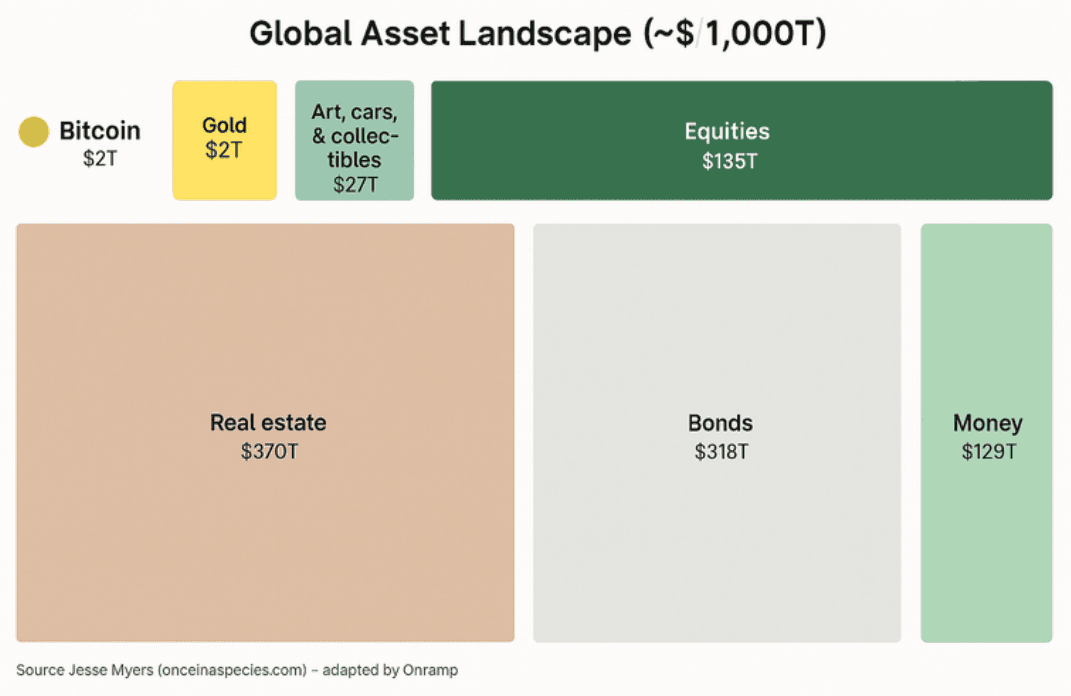
The Opportunity is Massive
The Scarcity Effect: A Fundamental Driver of Value
Bitcoin’s fixed supply contrasts sharply with fiat currencies and even gold. The expanding global demand, coupled with the strictly limited supply of 21 million bitcoin, ensures that Bitcoin’s value will continue to be driven upward. Historical data shows that adoption surges, especially after supply-halving events, have consistently resulted in significant price increases.
For RIAs, this scarcity-driven dynamic provides a rare opportunity to position clients for substantial long-term gains. By incorporating Bitcoin into portfolios, RIAs can offer clients exposure to an asset that combines inflation protection with transformative growth potential.
Addressing Bitcoin’s Volatility
Critics often point to Bitcoin’s price volatility as a barrier to adoption as an inflation hedge. However, this perspective overlooks Bitcoin’s long-term performance. Over rolling four-year periods, Bitcoin has consistently delivered high positive real returns, with its worst four-year compound annual growth rate (CAGR) exceeding 28%. When viewed through a long-term lens, Bitcoin’s volatility becomes less significant, especially for RIAs managing client wealth over extended time horizons.
| Period | Worst Return | 15th Percentile | Median | 85th Percentile | Best Return | Negative Periods (%) |
|---|---|---|---|---|---|---|
| 1Y | -73% | -32% | 103% | 304% | 1338% | 22% |
| 2Y | -30% | -7% | 89% | 230% | 468% | 20% |
| 3Y | 2% | 24% | 64% | 153% | 261% | 0% |
| 4Y | 28% | 34% | 63% | 128% | 172% | 0% |
Moreover, Bitcoin’s volatility has declined as adoption has increased and market liquidity has improved. Daily trading volumes have grown by over 500% since 2020, reaching an average of $30 billion per day in 2024. Enhanced liquidity and the proliferation of institutional-grade custodial services have made Bitcoin more accessible and practical for large-scale investors.
Navigating Bitcoin Integration into RIA Practices
Partnering with Bitcoin Experts: Outsourcing Expertise While Building Internal Knowledge
For RIAs, integrating Bitcoin into their practices doesn’t have to mean mastering every nuance of this new asset class overnight. By partnering with a Bitcoin-only expert asset manager like Onramp, RIAs can access deep expertise, white-labelled research, and tailored resources while gradually building their own internal knowledge and expertise.
Bitcoin’s ecosystem is intricate, spanning the technology itself, the investment case, market trends, evolving regulatory frameworks and safe custody. A specialist partner can provide the tools and insights needed to navigate this complexity with confidence, allowing RIAs to offer high-quality advice without delaying implementation. White-labelled research reports, market analyses, and custom webinars ensure that, from the client’s perspective, the RIA stands as a leader and pioneer in digital asset integration.
This collaborative approach enables advisers to stay ahead of the curve. By leveraging an expert partner’s resources (while participating in co-branded educational initiatives, client seminars, and thought leadership efforts), RIAs can demonstrate thought leadership without needing to reinvent the wheel. Over time, the firm’s own expertise can grow organically, creating a competitive advantage.
Building Client-Centric Investment Strategies That Incorporate Bitcoin
Partnering with a Bitcoin-only firm also enables RIAs to craft highly tailored strategies for their clients. These specialists can help RIAs:
- Design customised Bitcoin allocations that match risk profiles and financial goals.
- Highlight Bitcoin’s strategic roles, whether as a growth driver, inflation hedge, or portfolio diversifier.
- Provide a highly secure custody solution, assess market developments, and navigate evolving regulatory considerations.
This level of support ensures that each client’s Bitcoin exposure is optimally aligned with their broader investment objectives. By outsourcing the technical heavy lifting to a trusted partner, RIAs can focus on client relationships and delivering bespoke advice, while ensuring their investment strategies are informed by the highest level of expertise.
Additionally, this sort of partnership can provide RIAs with a turnkey way to address client concerns about volatility and risk management. The specialist partner firm can develop clear messaging to reassure clients about Bitcoin’s role in their portfolios.
Risk Management: Leveraging Expert Support to Meet Fiduciary Standards
Bitcoin integration brings unique challenges regarding custody and best execution. Here, a partnership with a Bitcoin-only firm can be transformative.
An expert Bitcoin-only partner firm can bring an established framework for compliance and governance to bare, allowing RIAs to seamlessly align Bitcoin strategies with their fiduciary responsibilities. Such a partnership can provide:
- Industry leading and robust custody and execution that meets stringent security and compliance standards.
- Comprehensive, white-labelled materials to ensure clients are fully informed.
- Ongoing guidance to stay ahead of regulatory changes and ensure all practices remain compliant.
This support not only protects the RIA from operational and reputational risks but also streamlines the integration process, allowing advisers to focus on client service while confidently meeting their fiduciary obligations.
Education and Leadership: Positioning RIAs as Pioneers
Through a Bitcoin-only partner, RIAs gain access to resources that establish them as industry leaders in the eyes of their clients. A partnership can enable RIAs to co-host webinars, provide white-labelled educational materials, and produce custom reports tailored to client concerns.
By leveraging these assets, advisers can:
- Educate clients on Bitcoin’s strategic value, from inflation protection to portfolio diversification.
- Address client questions with clear, well-informed answers supported by specialist insights.
- Demonstrate a forward-thinking approach, building trust and loyalty in a competitive market.
Over time, as RIAs integrate this expertise into their practice, they can position themselves as pioneers in the wealth management industry, without needing to bear the full burden of technical education and market navigation alone.
Communicating Bitcoin’s Value to Clients
Addressing Common Concerns: Volatility, Regulation, and Security
Effectively communicating Bitcoin’s value starts with addressing clients’ most pressing concerns: volatility, regulatory uncertainty, and secure custody. Many clients’ first impressions of Bitcoin are shaped by headlines about dramatic price swings, making it crucial for RIAs to provide context. A partnership with a Bitcoin-only expert firm can equip advisers with education, white-labelled reports, historical data, and customised presentations that illustrate Bitcoin’s long-term performance, its outperformance of traditional assets, and how a strategic allocation can enhance an overall portfolio. Security concerns, particularly fears of hacks theft, or custodian bankruptcy remain a top priority for clients new to Bitcoin. A partnership with a Bitcoin-only expert firm provides access to an institutional grade custody solution featuring state-of-the-art safeguards, including multi-signature, multi-institutional cold storage vaults. Highlighting these robust security measures helps RIAs instil confidence and demonstrate that the custody infrastructure minimises risk effectively.
By proactively addressing these concerns in collaboration with an expert partner, RIAs can foster trust and help clients make informed decisions about integrating Bitcoin into their financial plans.
Framing Bitcoin as a Strategic Opportunity, not a Speculative Gamble
To shift client perceptions, it’s essential to frame Bitcoin as a thoughtful, strategic addition to a portfolio, not a high-stakes gamble. A partnership with a Bitcoin-only firm can provide RIAs with the tools to present Bitcoin in its true light, including white-labelled data-driven insights, webinars, and client education resources.
Using these resources, advisers can emphasise Bitcoin’s distinctive properties: its low correlation with traditional assets, its role in diversification, and its alignment with long-term goals like inflation protection, portfolio return enhancement and technological innovation. This shifts the narrative from sensational headlines to informed, forward-thinking strategy.
Rather than encouraging a ‘get-rich-quick’ mentality, RIAs, supported by expert partners, can advocate for prudent allocation strategies tailored to clients’ risk tolerance and objectives. Demonstrating Bitcoin’s role in complementing, rather than replacing, traditional investments reinforces its legitimacy as part of a modern, well-rounded wealth plan.
By working alongside a specialist firm, RIAs can provide a clear, measured rationale for Bitcoin investments, positioning themselves as trusted guides who empower clients to make confident, informed decisions.
Aligning Bitcoin with Long-Term Financial Plans and Goals
Integrating Bitcoin into a client’s financial plan requires a purposeful approach, aligning allocations with their specific goals, such as retirement income, estate planning, or liquidity needs. Through collaboration with a Bitcoin-only partner, RIAs gain access to tailored tools and expertise to map Bitcoin strategies to different cohorts of investors with differing objectives and constraints. Specialist firms can also provide advice and vehicles for accessing bitcoin exposure through tax advantaged vehicles or leveraging bitcoin for collateralised dollar loans.
Specialist firms can help RIAs frame Bitcoin’s volatility within the context of a diversified portfolio, demonstrating how incremental exposure to this unique asset can enhance long-term returns and portfolio resilience. By presenting Bitcoin as one part of a broader investment strategy, advisers can illustrate its potential to reinforce, not disrupt, a client’s financial plan.
These partnerships also provide ongoing support, including white-labelled materials that outline allocation strategies, explain time horizons, and address common concerns. This ensures clients view Bitcoin not as a passing trend but as a carefully considered component of their wealth plan.
Operational and Strategic Considerations for RIAs
Custody and Security: Selecting the Right Solutions
When incorporating Bitcoin into their service offerings, RIAs must prioritise safeguarding client Bitcoin exposure through robust custody measures. Given that Bitcoin transactions are recorded on a decentralised ledger and are irreversible (i.e. Bitcoin is a bearer asset), the need for stringent security protocols cannot be overstated. Advisers should consider working with custodians that specialise in digital asset management, as these providers often offer an institutional-grade infrastructure, including multi-signature wallets and offline (‘cold’) storage solutions designed to minimise custody threats.
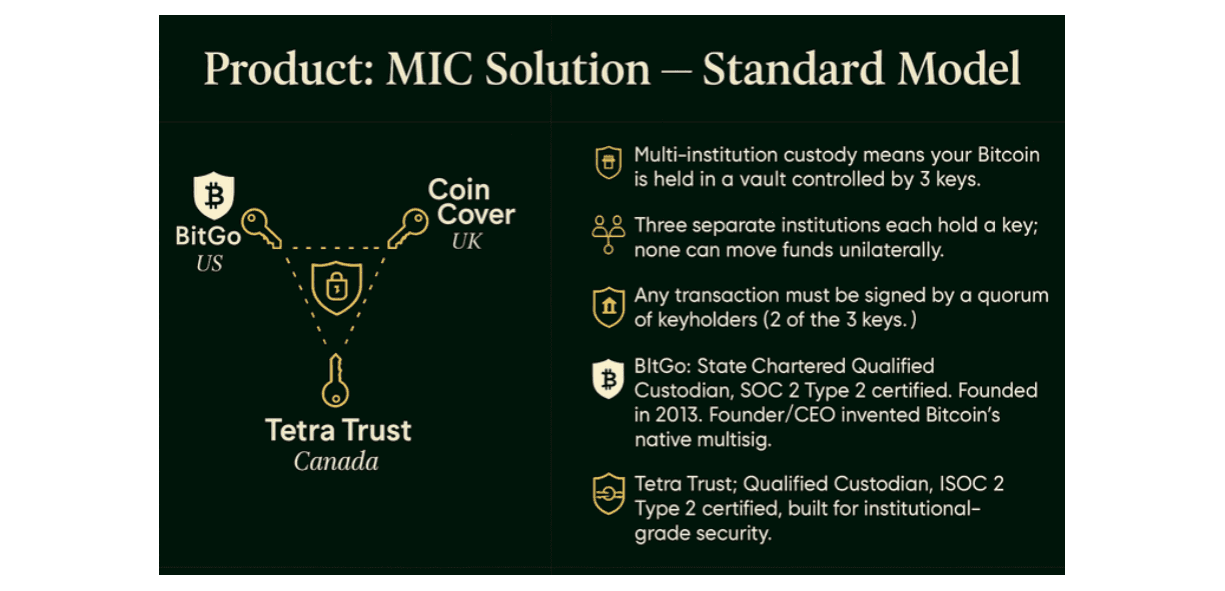
By outsourcing custody expertise to a trusted partner, RIAs can reassure clients that their Bitcoin holdings are secure, protected by cutting-edge infrastructure. This collaboration not only safeguards assets but also reinforces confidence in the RIA’s ability to manage Bitcoin investments professionally.
Technology Integration: Streamlining Operations Through Expert Partnerships
Integrating Bitcoin into an RIA’s service offering requires robust, user-friendly technology platforms. Partnering with a Bitcoin-only expert firm provides access to state-of-the-art tools tailored specifically for managing digital assets. These platforms can seamlessly integrate with existing portfolio management systems, enabling a unified view of client holdings across both traditional and digital assets.
Additionally, these platforms emphasise data security, regulatory compliance, and ease of use, ensuring RIAs can deliver an efficient and transparent client experience. By collaborating with a trusted partner, RIAs can remain agile as the digital asset sector evolves. Regular updates and insights from an expert firm ensure that the technology stack remains aligned with emerging best practices and market trends, empowering advisers to deliver secure, forward-thinking services.
Marketing and Messaging: Establishing Thought Leadership
With operational systems in place, RIAs can turn their attention to positioning themselves as Bitcoin pioneers. Through a partnership with a Bitcoin-only expert firm, advisers gain access to white-labelled content, market insights, and co-branded educational materials that can be tailored to their audience.
A consistent messaging strategy (including blog posts, webinars, market updates, and media contributions) allows the RIA to showcase its expertise while leveraging the deep knowledge of its partner. Participation in conferences, industry forums, and professional networks, supported by the partner firm, further elevates the RIA’s presence as a thought leader in digital assets.
This collaboration ensures that marketing efforts strike the right balance between client-friendly language and nuanced, data-driven analysis. By weaving in performance metrics, regulatory updates, and case studies provided by the partner, RIAs can communicate a clear, confident vision for Bitcoin’s role in wealth management. Strategic marketing powered by a trusted partnership reinforces the RIA’s reputation for innovation and expertise, distinguishing it in a competitive market increasingly shaped by the digital revolution.
Bitcoin as a Client Retention and Growth Driver
Engaging Younger, Bitcoin-Savvy Investors
One of the most tangible advantages of offering Bitcoin-related services is the appeal it holds for younger generations who have grown up in an era of digital transformation. These tech-aware individuals, who often seek innovative avenues for wealth building, may be sceptical of traditional finance alone or simply less attracted to conventional portfolio models. By demonstrating competence in digital assets, particularly Bitcoin, RIAs can capture the attention of a demographic that values agility, transparency, and forward-thinking strategies.
Providing clear, jargon-free resources on how Bitcoin fits into a broader financial plan can help advisers resonate with younger investors. This might include educational content around security precautions, and the long-term vision for Bitcoin as both a store of value and a technological platform. When these investors recognise an RIA’s expertise in Bitcoin, they are more likely to view the firm as a trusted partner capable of navigating an ever-evolving financial landscape.
Moreover, engaging this audience early can foster loyalty and encourage referrals. Younger investors who see tangible benefits from Bitcoin allocations (whether that’s enhanced returns, diversification, or simply feeling more in tune with market trends) are apt to recommend their adviser to peers within their network. By meeting the needs of a generation eager to embrace digital assets, RIAs can establish a dynamic growth engine for the future.
Building Loyalty Among Existing Clients by Meeting Evolving Expectations
As the financial industry continues to evolve, so do the expectations of longstanding clients. While some may be more cautious than younger investors, many are nevertheless aware of the rising influence of digital assets and have questions about how these innovations could safeguard or enhance their wealth.
By proactively addressing the Bitcoin conversation and integrating it into broader wealth strategies, where suitable, RIAs can demonstrate their adaptability and reinforce the sense that they are anticipating future needs, rather than merely reacting to current trends.
Providing balanced insights into Bitcoin, tailored to each client’s risk tolerance and investment objectives, can help foster deeper trust. This may involve outlining potential volatility scenarios, regulatory developments, or long-term adoption trends, all framed in the context of a client’s overarching financial plan. Such transparent, consultative discussions emphasise an RIA’s commitment to holistic advice, showcasing an attentiveness to evolving market opportunities.
Crucially, guiding existing clients through the nuances of digital assets can also strengthen adviser-client relationships. When clients see that their adviser is abreast of cutting-edge developments and prepared to offer thoughtful guidance, even if they choose not to allocate funds, loyalty and confidence tend to grow. In this way, meeting clients’ changing expectations around Bitcoin becomes more than just an investment proposition; it serves as a testament to the adviser’s dedication to continuous learning, adaptability, and client-centred service.
Showcasing Leadership in a Competitive Industry
In a crowded marketplace, demonstrating forward-looking competence can set an RIA apart from the competition. Embracing Bitcoin as part of a broader service offering illustrates not only technical proficiency but also an understanding of the transformative shifts reshaping finance. By actively developing in-house expertise, engaging with recognised thought leaders, and sharing market insights through professional channels, RIAs signal to existing and prospective clients that they are at the forefront of innovation.
Such visible industry leadership can also feed into wider brand differentiation. When an RIA showcases a clear methodology for integrating digital assets, coupled with a balanced perspective on their risks and rewards, it sends a powerful message about the firm’s commitment to comprehensive wealth management. Clients and peers alike will perceive a proactive, knowledgeable stance that prioritises transparent advice, putting the adviser in a stronger position to thrive as digital assets continue to expand their influence on the global financial landscape.
Conclusion: RIAs at the Forefront of Financial Innovation
Embracing Bitcoin as a Business Imperative
Bitcoin’s evolution from a niche concept to a recognised asset class marks a pivotal moment in finance. For RIAs committed to staying relevant and competitive, integrating Bitcoin into their offerings is no longer optional: it’s a business imperative. While scepticism about volatility or perceived marginality once dominated the narrative, growing institutional adoption and client demand make the case undeniable.
Through partnerships with Bitcoin-only expert firms, RIAs can seamlessly embrace Bitcoin without needing to master every detail immediately. These partnerships provide access to white-labelled research, secure custody solutions, and customisable client education resources, enabling RIAs to position themselves as thought leaders while outsourcing the technical complexities. By doing so, RIAs can capture new business, retain existing clients, and reinforce their reputation as forward-thinking innovators. Bitcoin isn’t just about portfolio construction: it’s a strategic opportunity to future-proof the business. By collaborating with specialists, RIAs can adapt operational frameworks, integrate robust compliance measures, and confidently communicate Bitcoin’s value to clients. This strategic approach signals to clients that their adviser is prepared for the future of wealth management.
Preparing for the Future of Wealth Management
The financial sector is undergoing transformative change, driven by technological innovation and shifting client expectations. RIAs have a unique opportunity to guide clients through this new era by leveraging Bitcoin’s potential as a diversifier, inflation hedge, and long-term growth asset.
A Bitcoin-only partner can help RIAs:
- Navigate regulatory changes with up-to-date compliance insights.
- Educate both advisers and clients through webinars, workshops, and white-labelled materials.
- Develop tailored allocation strategies that align Bitcoin with clients’ broader financial goals.
By addressing client concerns (such as volatility, security, and regulation) with the support of a trusted partner, RIAs can confidently integrate Bitcoin into long-term plans. This collaborative approach not only ensures relevance in a competitive market but also establishes the RIA as a pioneer in modern wealth management.
Partnering for Operational Excellence
RIAs don’t need to navigate the complexities of Bitcoin integration alone. A Bitcoin-only expert firm can simplify every stage of the process, from custody and compliance to education and marketing.
Key benefits of partnering include:
- Custody and Security: Institutional-grade solutions with cutting-edge safeguards like multi-signature vaults and cold storage.
- Technology Integration: Platforms tailored to digital asset management, offering seamless portfolio monitoring, and tax optimisation.
- Client Education: White-labelled research, webinars, and workshops to position the RIA as a Bitcoin thought leader while outsourcing the technical expertise.
- Regulatory Compliance: Ongoing updates and tools to ensure fiduciary standards are met without overburdening the RIA.
By leveraging these resources, RIAs can focus on client relationships and strategic growth while ensuring operational excellence and security.
RIAs: Pioneers of a New Financial Era
Bitcoin represents more than an asset class: it’s a gateway to the future of finance. For RIAs, the confluence of accelerating adoption, fixed supply, and client demand creates an unprecedented opportunity to lead.
Through strategic partnerships with Bitcoin-only firms, RIAs can:
- Differentiate themselves as modern, innovative wealth managers.
- Equip their clients with the tools and insights to capitalise on Bitcoin’s potential.
- Future-proof their practices in a financial landscape increasingly shaped by digital transformation.
By taking this measured, collaborative approach, RIAs position themselves at the forefront of financial innovation. They not only safeguard their own relevance but also empower their clients to thrive in an evolving investment landscape. Bitcoin isn’t just the future: it’s the opportunity for RIAs to lead it.
Why Onramp
For RIAs evaluating how to bring Bitcoin into their practice, the key question is whether to build internal expertise first or partner to access it immediately. The case for partnering is straightforward: the specialist knowledge already exists, the custody infrastructure is already built, and the client education materials are already developed. The only thing missing is the adviser relationship through which to deliver them.
Onramp is a Bitcoin-only firm designed specifically to support RIAs in this transition. The platform combines institutional Multi-Institution Custody with white-labelled research, client education resources, and specialist advisory support. RIAs can offer their clients professional Bitcoin exposure from day one, without needing to build the underlying expertise or infrastructure in-house.
The opportunity window for early movers is real. The advisers who develop Bitcoin fluency now, before the asset is universally accepted, will be the ones who define best practices for the profession and attract the next generation of high-value clients. Ignoring Bitcoin is no longer a neutral position. It is a decision to cede ground to advisers who have decided to lead.